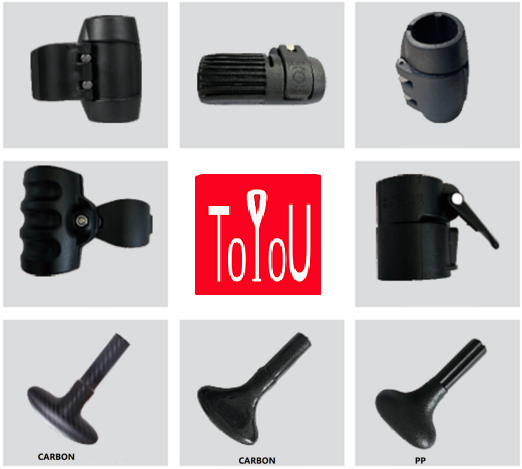
The Ergo grip, T-grip, and Palm grip are all types of paddle grips, each designed for specific paddling styles and comfort preferences. Here’s a breakdown of their differences:
T-Grip
- Shape: Shaped like a “T” — a straight bar perpendicular to the paddle shaft.
- Best For: Whitewater paddling, canoeing in rough water, or situations needing precise control.
- Pros:
- Excellent control and leverage.
- Better for quick maneuvers and bracing.
- Cons:
- Can be less comfortable for extended paddling.
- Not as ergonomic as other grip types.
Palm Grip (also known as Pear Grip or Teardrop Grip)
- Shape: Rounded or teardrop-shaped to fit the palm comfortably.
- Best For: Flatwater canoeing, recreational paddling, and touring.
- Pros:
- Very comfortable for long sessions.
- Fits naturally in the palm, reducing fatigue.
- Cons:
- Offers less precise control than T-grip.
- Not ideal for whitewater or aggressive maneuvering.
Ergo Grip
- Shape: Ergonomically shaped to follow the natural contours of your hand.
- Best For: Long-distance paddling, performance paddling, and those with hand fatigue or joint issues.
- Pros:
- Designed for maximum comfort and efficiency.
- Reduces strain on wrists and hands.
- Cons:
- More expensive.
- Can be personalized to specific hand shapes, so might not feel right for everyone.
Summary
| Grip Type | Best For | Pros | Cons |
|---|---|---|---|
| T-Grip | Whitewater, control | High control, strong grip | Less comfort |
| Palm Grip | Flatwater, recreation | Comfort, ease of use | Less control |
| Ergo Grip | Long distance, comfort | Ergonomic, reduces hand fatigue | Costly, fit may vary per user |