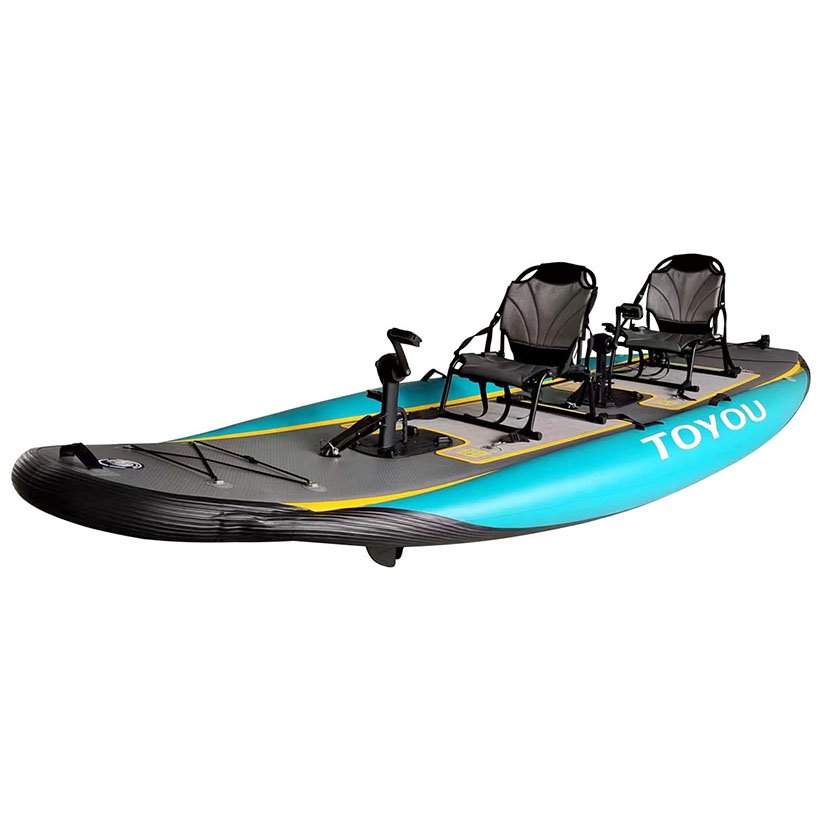
When choosing a tandem inflatable kayak, one of the most important specifications to understand is weight capacity. Whether you plan to paddle with a partner, bring a child, or load up fishing and camping gear, staying within the tandem kayak’s weight limit is critical for safety, performance, and durability.
What Does “Weight Limit” Mean?
The weight limit (also called maximum load or capacity) refers to the total weight the inflatable tandem kayak can safely support, including:
- Both paddlers
- Gear (coolers, fishing tackle, dry bags)
- Optional accessories (seats, pedal drives, motors, batteries)
- Pets or children
Exceeding this limit can reduce stability, slow the inflatable kayak, and increase the risk of damage or capsizing.
Why Weight Limits Matter
1. Stability and Safety
An inflatable kayak operating near or above its maximum capacity sits lower in the water, making it:
- Less stable
- More affected by waves and wind
- Harder to re-enter after a capsize
2. Performance and Tracking
Overloading causes:
- Slower speed
- Poorer tracking (harder to paddle straight)
- Increased fatigue for paddlers
3. Durability and Air Chamber Stress
Inflatable kayaks rely on air pressure for structure. Excess weight increases stress on:
- Seams
- Drop-stitch floors
- Valves and chambers
Over time, this can shorten the kayak’s lifespan.
How Much Capacity Do You Really Need?
A good rule of thumb is to use only 75–85% of the stated maximum capacity.
Example
If a tandem inflatable kayak has a 600 lb (272 kg) weight limit:
- Ideal working load: 450–510 lbs (204–231 kg)
This buffer improves handling and allows for unexpected extra gear.
Tandem Kayak Weight Limit by Use Case
Two Adults
- Average adult paddlers: 150–200 lbs each
- Combined weight: 300–400 lbs
- Recommended kayak capacity: 500 lbs or more
Adult + Child
- Combined weight often under 300 lbs
- A 450–500 lb capacity inflatable kayak is usually sufficient
Tandem Kayak Fishing
Fishing adds significant weight:
- Rods, tackle boxes, anchor, fish finder
- Cooler or livewell
Recommended capacity: 550–650 lbs or higher
Pedal-Drive Tandem Kayaks
Pedal systems add weight themselves:
- Pedal drive unit
- Rudder system
- Batteries (if using electronics)
Recommended capacity: 600–700 lbs
Design Factors That Affect Weight Capacity
Several construction features influence how much weight a tandem inflatable kayak can handle:
- Drop-stitch floors – Increase rigidity and load-bearing ability
- Multiple air chambers – Improve buoyancy and safety
- Wider hulls – Better weight distribution and stability
- Higher sidewalls (tubes) – More freeboard when loaded
Fishing and expedition models usually incorporate all of these features.
What Happens If You Exceed the Weight Limit?
Overloading can result in:
- Reduced freeboard (kayak rides too low)
- Water splashing into the cockpit
- Increased drag and poor maneuverability
- Higher risk of seam or chamber failure
- Voided manufacturer warranty in some cases
For safety and longevity, staying within limits is essential.
Tandem inflatable kayak weight limits are not just numbers on a spec sheet—they directly affect safety, comfort, and performance. When choosing a kayak, always consider:
- Combined paddler weight
- Gear and accessories
- Intended use (recreation, touring, fishing, pedal-drive)
If you regularly paddle with heavy gear or plan to fish, choosing a tandem inflatable kayak with a higher-than-necessary weight limit will give you better stability and peace of mind on the water.