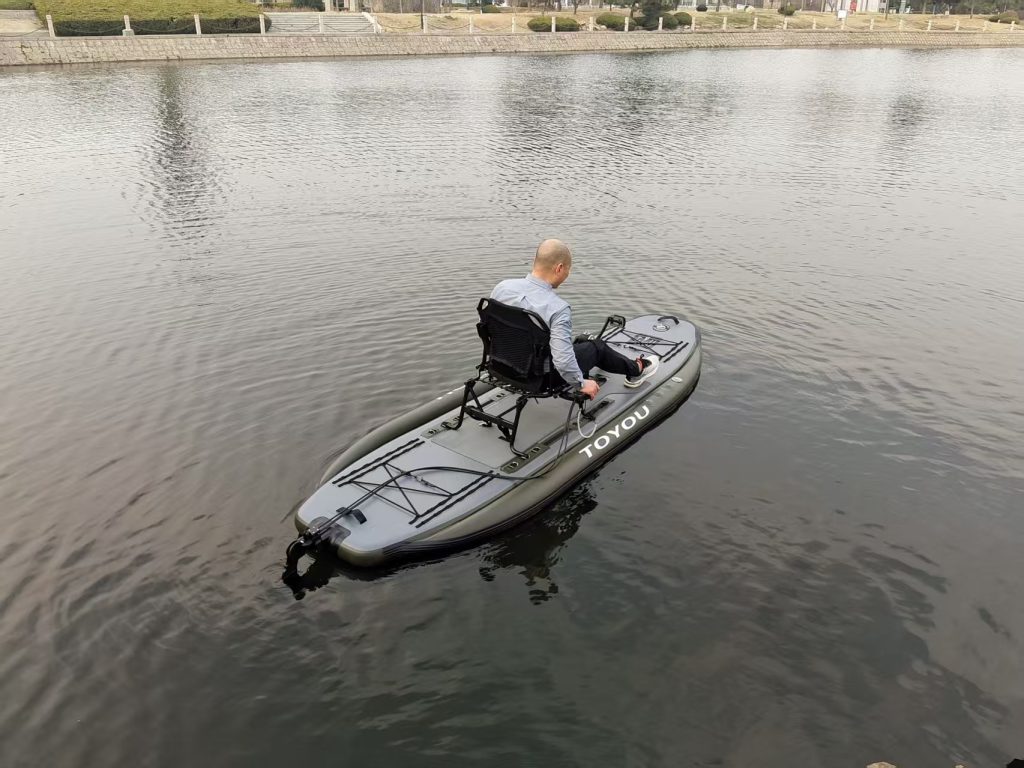
Yes, you can kayak in cold regions with an inflatable kayak, but there are important precautions and considerations to ensure safety and performance:
Things to Consider Before Kayaking in Cold Regions with an Inflatable Kayak:
1. Quality of the INFLATABLE Kayak
- Use high-quality, cold-weather rated inflatable kayaks made from durable materials like PVC or Hypalon.
- Check if it’s rated for cold temperatures (some cheaper inflatable kayaks may become brittle or deflate in the cold).
2. Air Pressure Management
- Cold air lowers internal air pressure, so inflate your inflatable kayak slightly above the normal level at launch and recheck pressure after launch.
- Bring a pump to adjust as needed during the trip.
3. Freezing Water and Ice Hazards
- Avoid areas with sharp ice or partially frozen water, which can puncture the kayak.
- Choose sheltered waters (like fjords, lakes, or slow rivers) without fast-moving ice.
4. Dress for Immersion
- Use a drysuit, neoprene gloves, and insulated boots.
- Always dress as if you’ll fall into the water — hypothermia is a real danger.
5. Safety Gear
- Always wear a PFD (personal flotation device).
- Bring a paddle leash, bilge pump, thermal blanket, communication device (VHF or GPS tracker), and a first-aid kit.
6. Plan and Prepare
- Let someone know your route and expected return.
- Paddle with a buddy if possible.
- Be aware of weather changes — wind and waves can escalate quickly in cold climates.
Advantages of Inflatable Kayaks in Cold Regions
- Portability: Easy to carry in snowy or remote areas.
- Stability: Many inflatables are very stable, which helps in choppy or icy waters.
- Buoyancy: Inflatables are inherently more buoyant, offering extra safety.
When to Avoid Using Inflatable Kayaks:
- Extremely cold temps (below freezing) where air pressure becomes unreliable.
- Glacier-fed rivers with fast currents and sharp debris.
- Open ocean in winter where conditions are unpredictable and rough.