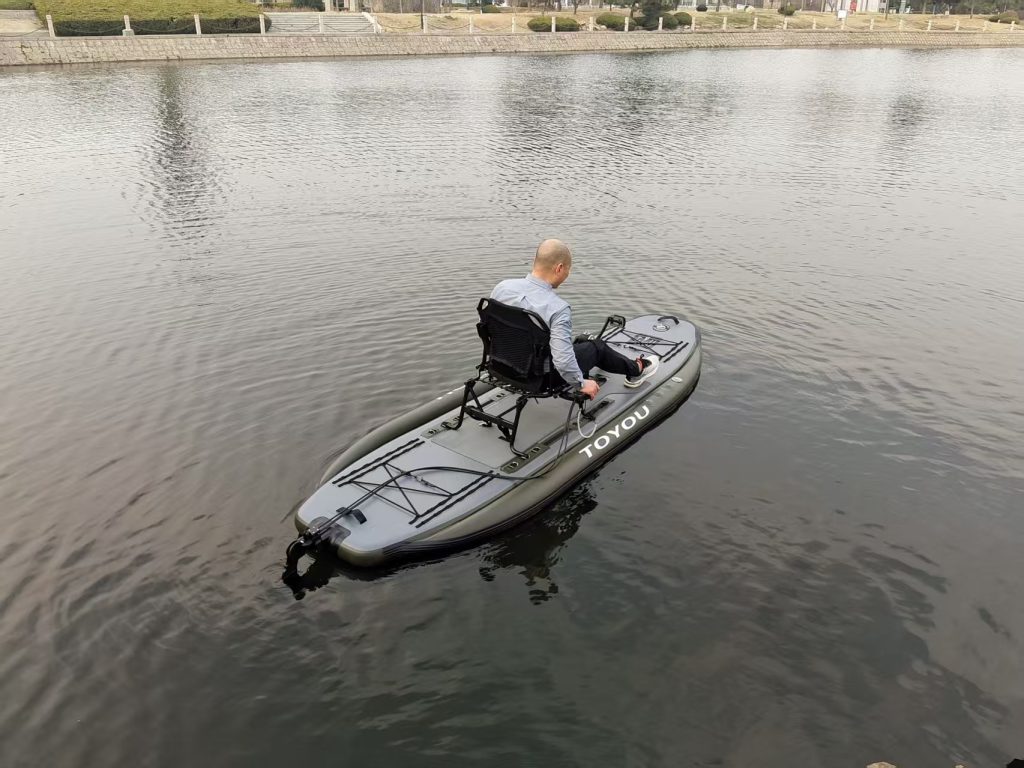
Inflatable fishing kayaks come in many shapes, but two of the most common hull designs are V-hull and flat-bottom. Both have strengths and weaknesses, and the “best” option depends on where you fish, how you paddle, and the balance you want between stability and speed.
1. Hull Shape Overview
- V-Hull
The bow and sometimes the entire bottom form a “V” shape, creating a sharper entry into the water. In inflatables, this is achieved using drop-stitch construction or reinforced air chambers. - Flat-Bottom
The hull is wide and flat, maximizing surface contact with the water. This design focuses on stability and comfort over raw speed.
2. Performance Comparison
| Feature | V-Hull Inflatable | Flat-Bottom Inflatable |
|---|---|---|
| Stability (Primary) | Moderate — slightly tippy at first, but good secondary stability once tilted. | Excellent — very stable when sitting or standing. |
| Speed & Efficiency | High — cuts through water with less resistance, great for covering distance. | Moderate — slower due to more drag. |
| Tracking (Straight-Line Performance) | Excellent — stays on course with fewer correction strokes. | Fair — needs more steering corrections in wind or current. |
| Maneuverability | Moderate — turns well but not as sharply in tight spots. | High — easy to turn quickly, good for narrow creeks and shallow areas. |
| Wave & Chop Handling | Excellent — slices through waves, less splash. | Fair — tends to slap and bounce on waves. |
| Shallow Water Performance | Moderate — deeper bow can catch in very shallow spots. | Excellent — rides high, ideal for skinny water. |
3. Fishing-Specific Considerations
When a V-Hull Excels
- Long paddles to remote fishing spots where efficiency matters.
- Large lakes, bays, or coastal waters with wind and small waves.
- Situations where maintaining a straight course is important, such as trolling.
When a Flat-Bottom Excels
- Calm lakes, ponds, and slow rivers where stability is top priority.
- Fishing styles that require standing, sight casting, or moving around the deck.
- Shallow-water fishing where a deep bow would be a disadvantage.
4. Comfort & Setup
- V-Hull kayaks often have slightly narrower cockpits, which may feel snug for some anglers but improve paddling efficiency.
- Flat-Bottom kayaks generally feel more spacious and stable, making them comfortable for relaxed fishing days.
5. Price & Portability
Both types can be similarly priced depending on materials and features, but V-hull inflatables often use higher-pressure drop-stitch construction, which can raise costs. Portability is roughly equal, though V-hull designs may pack slightly bulkier due to extra reinforcement.
Choosing the Right Hull for You
- Choose a V-Hull if you often fish in open water, deal with wind and chop, or need to cover long distances quickly. You’ll get better tracking and efficiency, though you’ll sacrifice a bit of initial stability.
- Choose a Flat-Bottom if you value maximum stability, stand-up casting, or fish mainly in calm, shallow waters. It’s beginner-friendly and great for relaxed, short-distance paddling.
The right choice ultimately depends on your fishing environment and style. Some anglers even own both types — using a V-hull for long, open-water trips and a flat-bottom for short, easy outings.